

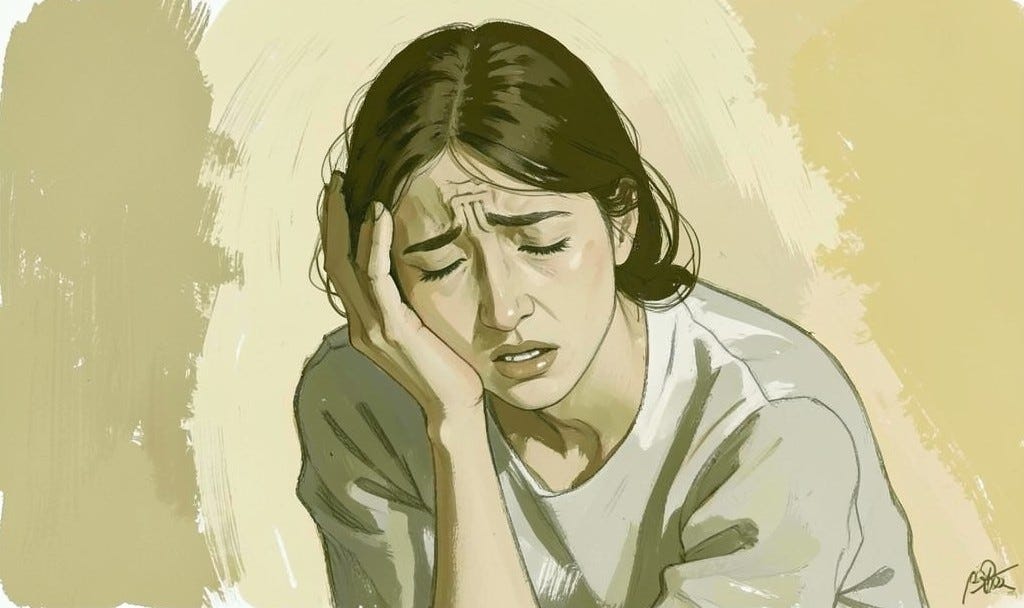
Don’t be quick to rid people of the consequences of their actions and decisions.
There is a principle woven into human existence: actions have consequences.
The universe is designed in such a way that wrong choices eventually produce unpleasant effects. The goal, ideally, is that when wrongdoing is confronted by its consequences, the person learns from their folly and turns over a new leaf.
If you constantly deny people the opportunity to face the “consequences” of their decisions and grow from them, you may actually be interrupting a process that was designed to teach them.
And eventually, that same dysfunction may come back to you.
Justification says you are free from the eternal consequence of sin, not that you are free from every earthly consequence of your actions.
Everyone will receive the result of the things they did in the body (2 Corinthians 5:10).
The aspect of eternal justification that we sometimes stress is the part that concerns our relationship with the Father. That is settled. No dispute about that.
But justification does not mean that wrong living has no consequences.
There are consequences for wrong living. There are consequences for a lack of growth. There are consequences for ignorance. There are consequences for irresponsibility. Some of these consequences have been ingrained into the fabric of human existence. These consequences do not simply disappear because you have been justified.
For instance, if you don’t work, you may not have food to eat.
Paul says:
“The one who is unwilling to work shall not eat.” — 2 Thessalonians 3:10
That’s cause and effect.
If you don’t study, you won’t know.
That’s cause and effect.
Ignorance is often the consequence of refusing to learn.
If you refuse to prepare for an examination, academic failure should not surprise you. If you consistently mishandle your marriage, marital problems should not surprise you. If you continually neglect your emotional development, emotional problems may eventually expose what you refused to deal with.
The same principle applies to money, relationships, health, character, business, leadership, and almost every other area of human existence.
One beautiful thing about cause and effect, as I’ve mentioned already, is that the effect can jolt us back to reality. It reminds us that we cannot endlessly game the system. Sometimes the pain is the lesson. Sometimes the loss is the teacher. Sometimes the disappointment is the mirror.
These realisations may never have happened if someone had constantly shielded us from the consequences of our actions.
If you married wrongly, for instance, the painful experience of that union may teach you not to be rash with lifelong decisions.
Your lesson may eventually go beyond you. You may help other unmarried people make better marital choices. You suffered for your mistake, but you learned from it. And because you learned from it, you may help another person avoid the same mistake. The system becomes balanced.
The pain was not necessarily meaningless.
It became instruction. And instruction became wisdom. This is one of the reasons I don’t believe we should always rush to rescue people from the consequences of their choices. Sometimes, rescue delays maturity. Every wrong we do creates some form of imbalance—not necessarily in some mystical sense, but in the very real web of human relationships and consequences.
Our individual actions affect other people. Our collective actions affect societies. Our societies affect the earth and the whole of creation.
This is part of what Scripture is getting at when it says:
“Sin entered the world through one man, and death through sin, and in this way death came to all people.” — Romans 5:12
One man’s action had consequences beyond that man. That’s how interconnected human existence is. What one generation normalises, another generation can inherit. What one generation refuses to confront, another may have to fight.
A friend once told me of a child who exhibited strange levels of worry and anxiety.
What is a little child of seven or eight so afraid of?
Who taught him to worry so much?
I was later told that he had picked it up from his grandmother, who was a chronic worrier.
Now, we don’t know exactly how it began. But behaviours can certainly be learned, modelled and transmitted through families. A child watches an adult respond to uncertainty with fear, and that response can become normal to the child. Then the child grows. The child has children. And suddenly, what began as one person’s unresolved pattern becomes a family pattern.
Now, salvation does not automatically erase every learned behaviour, emotional pattern, or character deficiency.
A person can be saved and still need to unlearn things. The believer can be justified and still need transformation. The fact that Christ has saved you does not mean you no longer have anything to learn. That worrying pattern will need to be confronted.
And I don’t necessarily mean starting to cast and bind the “spirit of worry.” Sometimes the problem is not a demon. Sometimes the problem is a pattern. Sometimes it is ignorance. Sometimes it is a worldview. Sometimes it is an emotional response learned over many years.
And sometimes it is simply a person who has never been forced to confront the consequences of their way of thinking.
Now imagine this young man grows with this character, and every time he worries himself sick, someone immediately comes to calm him down. Someone fixes every problem for him. Someone removes every consequence. Someone constantly reassures him without ever teaching him how to deal with uncertainty.
What happens?
He may never develop the capacity to confront the underlying problem.
The goal should not be to make him suffer. The goal should be to stop making his dysfunction comfortable. There is a difference.
If several teachings don’t help him quit such a lifestyle, perhaps life itself will eventually expose the cost of remaining that way.
His worry may lead him into decisions that have serious consequences for his life. His anxiety may cost him opportunities. His inability to make decisions may cost him relationships. His constant fear may prevent him from becoming the person he could have become. And when he finally sees the consequences clearly, something may happen inside him.
He may finally say: “I cannot continue like this.”
That moment is powerful. Because now, he is no longer being forced to change by someone else. He has become willing to change himself. He will read books. He will study God’s Word. He will take counselling sessions. He will seek wisdom. He will confront his patterns. He will do the difficult inner work. And eventually, he may become free from what once controlled him.
Then something beautiful happens.
His children may not have to inherit the same pattern.
His family may become different. The thing that travelled through generations can stop with him. That’s how transformation works. One person confronts what previous generations tolerated, and an entire lineage can experience something different.
This is why judgment is necessary.
But we have misunderstood judgment.
Judgment is not always about destruction. True judgment exposes what is wrong so that it can be corrected.
A judge identifies what is out of order. A mirror reveals what is wrong with your appearance. Pain reveals that something in the body needs attention. Consequences reveal that something in our behaviour needs attention.
Judgment, properly understood, brings things into the light. And what is brought into the light can finally be dealt with.
So, next time you’re constantly feeding the laziness or irresponsibility of someone, remember what you may actually be reinforcing.
If you continually rescue a lazy person from the consequences of laziness, you may not be helping them. You may be teaching them that laziness has no cost. If you continually cover the irresponsible person, you may be making irresponsibility sustainable. If you constantly pay the debts of someone who refuses to learn financial responsibility, you may be protecting the very behaviour that keeps them poor.
Sometimes love says: “I will help you.”
And sometimes love says: “I cannot keep protecting you from this consequence.”
Both can be love. The difference is wisdom. Don’t be so quick to remove every discomfort from people’s lives that you remove every opportunity for them to grow.
Let the lazy person experience the cost of laziness.
Let the irresponsible person encounter the consequences of irresponsibility.
Let the immature person discover that immaturity has a price.
Not because you hate them. Not because you want them to suffer. But because sometimes the consequence is the very thing that wakes a person up. The goal is not punishment for punishment’s sake. The goal is transformation. The goal is that they learn from their folly, turn a new leaf, and become better.
And when they become better, their children may become better. And when their children become better, another generation may inherit something healthier. This is how one person’s judgment can become another generation’s freedom.
So, don’t be quick to rid people of the consequences of their actions and decisions.
You may think you’re saving them from pain when you’re actually saving them from the lesson that could have changed their life.