

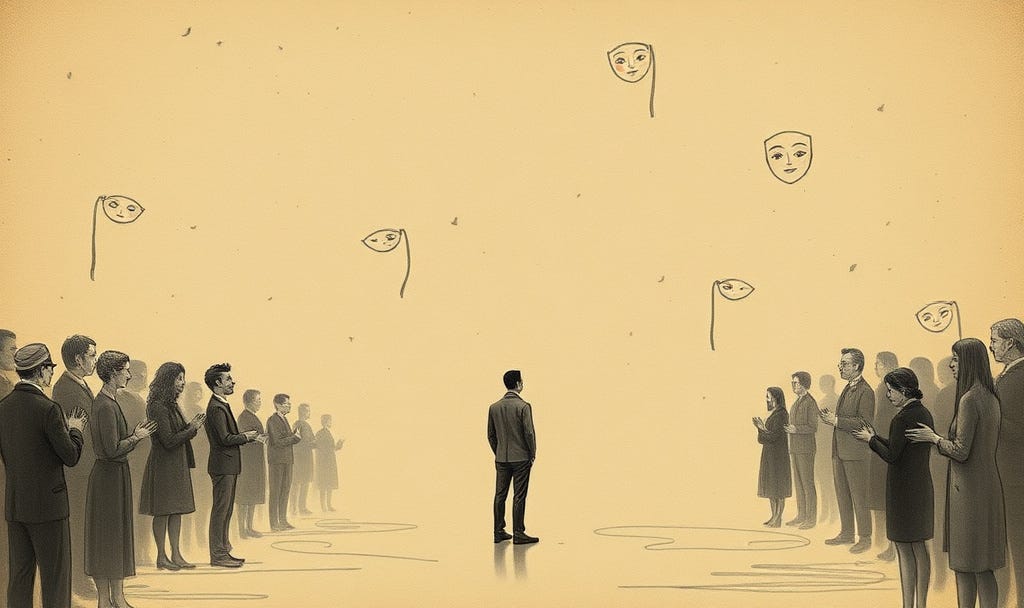
The wolf we sometimes cry about people taking our values or worth for granted is not really our value or worth that is being threatened, but our pride and ego.
Most value-centric statements that argue that people should value us are a subtle way of trying, by all means, to protect our pride and feel secure.
Why should anyone not want their ego or pride protected in the first place?
There is one big reason: unending validation.
Unending validation is when we constantly look outside to feel better and act better.
If we pursue ego and pride protection at all costs, then we are terribly insecure.
When we are insecure, we feel constantly miserable, and to feel better, we look for external validation to help us save face.
But one validation cannot suffice for the myriad insecurities we feel on a daily basis. So we keep seeking validation so that we can keep feeling good about ourselves.
This is what I termed unending validation.
Why is unending validation bad?
One reason unending validation is bad is that it makes us unnecessarily vulnerable and exploitable.
If we fall into the hands of manipulative people who get wind that we feed on external validation to feel right, they can exploit this weakness in so many ways.
For instance, they can give us what we are dying for (the validation) and turn leeches.
You won’t be able to push them away because they make you feel good, even if you don’t like how parasitic they are.
They make you feel good, and in return, milk you dry. An unnecessary ‘win-win’ situation if you ask me.
They can milk your resources, your ideas, your emotions, etc. And rightly so, after all, they’re meeting your most important, albeit unnecessary, need.
So, if you are very value-conscious and you’re always sticking out your nose to fish out those around you who do not discern your value, maybe, just maybe, you’re very insecure, and you’re trying to protect your pride and ego at all costs.
Those who are very valuable do not have time to recognise who doesn’t see their value. They just keep churning out value, for in getting to that height of value, they have learnt that their emotions and feelings are not based on who recognises their value or not.
In other words, their value first of all changed them.